Bad reason
Too vague to review
Short, over, forgot, ask GM, maybe deposit, or will check tomorrow all force another follow-up.
Problem aware guide
A variance note like short, over, forgot, or ask GM does not help the reviewer. A useful reason explains what likely happened, what proof exists, who owns the next step, and whether the item is still open.
Buyer knows variance notes are vague and wants a better standard.
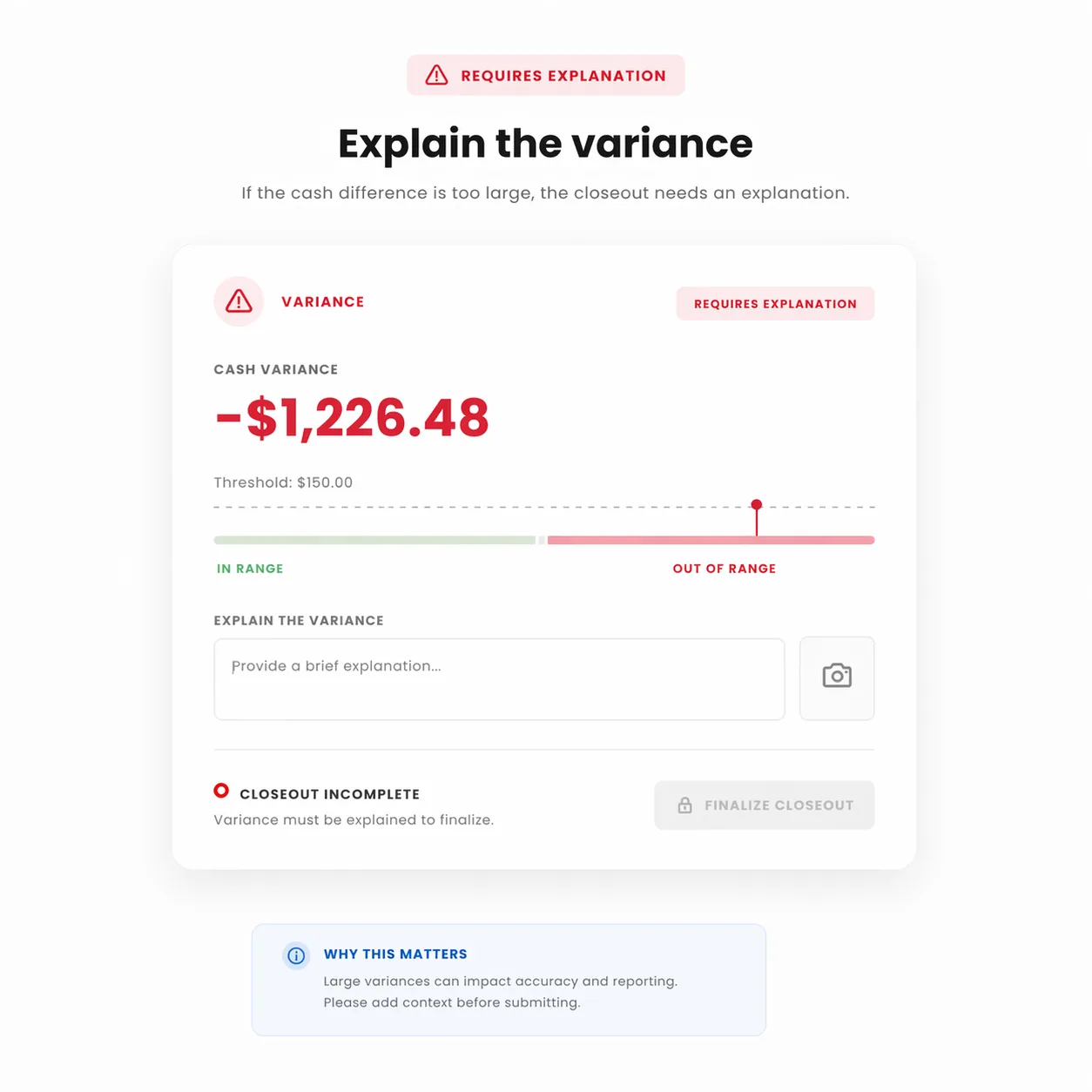
Bad reason
Short, over, forgot, ask GM, maybe deposit, or will check tomorrow all force another follow-up.
Good reason
The reason names the likely cause, proof state, owner, and whether the reviewer can resolve or needs escalation.
Pilot signal
By Day 14, fewer closeouts should need manager memory because the reason already carries useful context.
Reason standard
The point is not longer notes. The point is enough context to route, resolve, coach, or escalate without starting from scratch.
Feels the pain. Needs checklists, worksheets, and calculators tied to familiar closeout problems.
Likely cause
Proof state
Owner
Status
Next action
Questions
A useful reason names the likely cause, proof state, owner, current status, and next action so the reviewer can route or resolve the exception.
Related in this stage